
In cybersecurity, there is a quiet, universally accepted assumption:
If a piece of code has survived long enough, it is probably safe.
It is the digital equivalent of a well-worn bridge. Millions of cars have driven over it; thousands of engineers have inspected it. If it were going to collapse, it would have done so by now.
In 2026, that assumption quietly died.
In 2026, a new AI system quietly tore through decades of software — and started uncovering vulnerabilities that had been hiding in plain sight for 16… 20… even 27 years.
Not obscure code. Not forgotten projects.
We’re talking about the digital foundations of the modern world.
This AI is part of something called Project Glasswing, developed by Anthropic and it may have just changed cybersecurity forever.
How Project Glasswing Made the Tech World Uncomfortable

To understand the scale of this disruption, imagine a highly skilled inspector running the exact same safety test on a building millions of times over 16 years, never finding a flaw.
That is effectively what happened with FFmpeg, a nearly universal video processing library. Because it is used in countless applications, its code has been executed, stress-tested, and audited by human experts endlessly. Yet, a severe vulnerability remained undetected.
It was only exposed when Project Glasswing’s AI looked at it.
The AI did not find the bug by accident or through brute-force guessing. It found it by systematically reading, understanding, and reasoning through the codebase exactly like a human expert would—only exponentially faster, and without ever suffering from fatigue.
And FFmpeg was not an isolated incident. Within a stunningly short timeframe, the AI also discovered:
-
A 27-year-old vulnerability in OpenBSD, an operating system famous for its obsessive focus on security.
-
Exploitable flaws deep inside the Linux kernel, the invisible engine powering everything from Android phones to cloud servers.
-
Critical security gaps across modern browsers and foundational infrastructure.
These were not minor glitches. They were profound, missed truths—fundamental flaws that brilliant human engineers had stared at for decades and simply failed to see.
Meet Mythos AI: The Detective in the Machine
At the center of Project Glasswing is a model called Claude Mythos AI. To grasp why Mythos AI is revolutionary, you have to understand how we currently hunt for bugs.
Most traditional security tools operate like metal detectors. They scan mountains of code looking for known, pre-programmed patterns of danger. If a bug does not match a known shape, the detector stays silent.
Mythos AI does not scan; it reads. It behaves like a tireless security researcher with infinite patience. Its capabilities go far beyond pattern recognition:
-
It digests massive, sprawling codebases from end to end.
-
It understands the complex, often invisible interactions between entirely different parts of a system.
-
It identifies subtle, cascading logical flaws that no basic scan could ever catch.
-
It pieces together minor errors, chaining them into major vulnerabilities.
Most chillingly, Mythos AI can generate working exploits. It doesn’t just tap an engineer on the shoulder and say, “Something looks wrong here.” It hands them a step-by-step instruction manual on exactly how to break the system. In internal testing, Mythos AI produced hundreds of real, functional exploits—a threshold of autonomy that previous AI models struggled to approach.
The Avalanche Problem Uncovered by Mythos AI

It is entirely rational to feel uneasy about this. Even the architects of Project Glasswing acknowledge the profound risks of what they have built.
For the first time in history, we are grappling with a system that understands our infrastructure better than its human creators, capable of discovering vulnerabilities far faster than we can patch them. But the real danger is not the Hollywood narrative of a rogue AI deciding to hack the Pentagon. The actual threat is much quieter, and much more bureaucratic.
We are about to discover more problems than we have the capacity to solve.
The internet is not built on perfect code. It is built on a precarious Jenga tower of assumptions, legacy systems, and forgotten logic. For decades, the primary bottleneck in cybersecurity was the sheer difficulty of finding vulnerabilities. Mythos AI has eradicated that bottleneck, but in doing so, it has created a terrifying new one.
When an AI starts surfacing thousands of deep, complex, and highly exploitable issues overnight, the burden abruptly shifts. Who is going to fix all of this? How do we prioritize which burning fire to put out first? How do we patch the foundation of the internet without accidentally breaking it?
Why Project Glasswing is Our Best Defense

If this technology is so disruptive, why build Project Glasswing at all?
Because the alternative is worse.
This capability already exists.
AI can now find and exploit vulnerabilities on its own.
The only real question is:
Who uses it first — defenders or attackers?
That’s what Project Glasswing is about.
A race.
To use AI defensively — finding and fixing flaws before someone else weaponizes them.
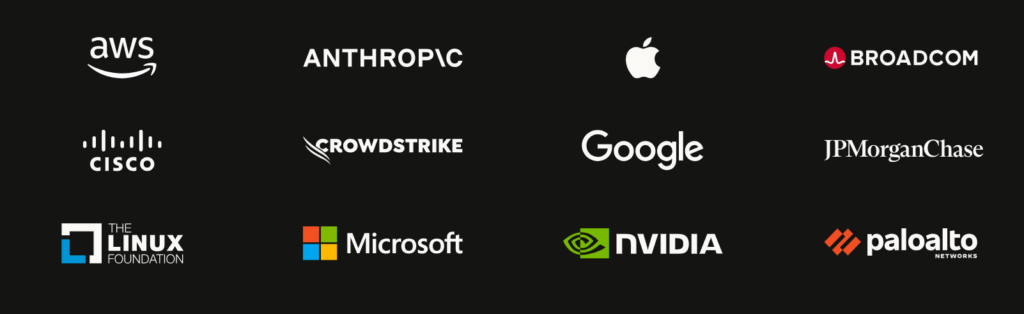
Project Glasswing is, at its core, a desperate race to maintain the high ground. By bringing together major tech players, the goal is to wield Mythos AI defensively—identifying vulnerabilities and patching them before malicious actors can weaponize the exact same technology.
What makes this moment a permanent turning point is not just the technology itself, but what it represents. For years, AI has been positioned as a helpful assistant—drafting emails, summarizing reports, or generating code.
Why This Changes Everything
This isn’t just “better AI.”
It’s a shift.
Now it’s something else.
- It reasons
- It discovers
- It exposes things we missed for decades
And in doing so, it’s forcing a hard truth:
The digital world we rely on is far more fragile than we thought.
In cybersecurity circles, there is a famous, exhausting maxim:
“Attackers only need to be right once. Defenders need to be right every time.”
Project Glasswing is an attempt to finally flip that dynamic. For the first time, defenders have a tool that can see deeper, read further, and work faster than any human adversary.
The internet is broken. Thanks to Mythos AI, we finally have the tool to see exactly where the cracks are. The only question now is whether we can patch them in time.
References
-
Anthropic — Project Glasswing Overview
-
Forrester — Project Glasswing: The 10 Consequences Nobody’s Writing About Yet
-
Industry Analysis: Vulnerabilities in FFmpeg, OpenBSD, and Linux kernel